How does fault change the amount of money you get after a crash in the city? The Impact of Comparative Negligence on Boston Injury Settlements determines if the insurance company pays your bills or if you walk away with nothing.
In Massachusetts, the law allows you to recover money even if you share some blame, but only if your portion of the fault stays at or below 50 percent.
Negligence refers to the failure of a person to act with the care that a reasonable person would use in the same situation. When an accident happens on a busy road like the Southeast Expressway, the court looks at the actions of everyone involved, which is why working with a Personal injury lawyer at Altman-Nussbaum-Shunnarah Trial Attorneys can be critical to protecting your rights.
Comparative negligence is the legal process of dividing that fault between the different parties. If the other driver bears more responsibility than you do, you can still seek a recovery for your medical costs and lost wages.
Winning Insights for Your Claim
- Massachusetts law follows a modified comparative negligence system that prevents anyone more than 50 percent at fault from recovering money.
- Courts reduce a final settlement or jury award by the specific percentage of fault assigned to the person seeking money.
- Insurance adjusters often use a survivor's recorded statement to find small admissions of guilt that shift the blame away from their client.
- Evidence such as cell phone records, dashcam video, and black box data from vehicles provides factual proof to counter false claims of fault.
- Property owners frequently use comparative negligence to argue that a person should have seen a hazard like ice or a broken step before falling.
These legal facts create the foundation for every injury claim in the city and determine the strategy used to fight for a fair outcome.
The 51 Percent Bar in Massachusetts
The most significant hurdle in any local injury case is the 51 percent bar. According to Massachusetts General Laws Chapter 231 Section 85, a person cannot collect any money if their share of the blame is greater than the share of the people they are suing.
This means if a jury decides you are 51 percent responsible for a wreck on Storrow Drive, the law forbids you from receiving a single cent.
- If you are 50 percent at fault, you can still recover half of your damages.
- If you are 51 percent at fault, the insurance company pays nothing.
- The difference of a single percentage point can mean the difference between a check for $100,000 and zero.
This strict cutoff encourages insurance companies to hunt for any reason to blame you. They might claim you were speeding by even a few miles per hour or that you did not use your turn signal soon enough.
We fight these minor accusations by showing that the defendant’s major safety violations caused the actual harm. We hold the person who made the most dangerous choice accountable for the results, which is why speaking with a personal injury lawyer too soon can help protect your rights from the start.
Tactical Blame and the Insurance Adjuster
Billion-dollar insurance corporations train their adjusters to find ways to save money. They use comparative negligence as a primary tool to devalue your claim. When an adjuster calls you after an accident, they act friendly to lower your guard.
They hope you will say something like, I did not see them coming, or, I was in a rush. They take these simple phrases and turn them into proof that you were not paying attention.
- They use the 18-year-old driver's lack of experience to suggest they could not handle a difficult traffic situation.
- They point to the location of the damage on the vehicles to claim you had time to avoid the impact.
- They search your medical history for old injuries to claim your current pain did not come from the accident.
Adjusters know that even a small shift in fault saves their company thousands of dollars. We stop this by managing all communication with the insurance company. We prevent you from falling into these traps and keep the focus on the reckless actions of the other driver. Our team gathers the evidence needed to build a wall against these blame-shifting tactics, which is why speaking with a personal injury lawyer before you hire them can help you understand how your case should be handled from the very beginning.
Pedestrian and Bicyclist Scenarios in Boston
The narrow streets of the North End and the busy intersections near the Seaport create many opportunities for accidents involving people on foot or on bikes.
Insurance companies almost always try to blame the pedestrian or the rider. They claim the person was not in a crosswalk or that the bicyclist swerved into traffic.
- We look at the city’s traffic light timing to show you had the right of way.
- Our team secures video from local businesses that shows the driver was speeding or distracted by a phone.
- We prove that the driver failed to yield, which is a common cause of injuries near the Boston Common.
Drivers have a duty to watch for more vulnerable people on the road. When they fail this duty, we hold them responsible. We do not let the defense argue that your presence on the road was the cause of the injury.
We focus on the driver’s failure to share the street safely and follow the rules of the road.
Trucking Accidents and Multi-Party Fault
Crashes involving large commercial trucks often involve more than two parties. There might be a truck driver, a trucking company, and a maintenance provider. Each of these parties will try to blame the others and they will all try to blame you, especially during an on-going personal injury case when fault and liability are still being contested.
This makes the comparative negligence analysis very difficult.
- The trucking company might claim the driver acted against their training.
- The maintenance shop might claim they did not work on the specific part that failed.
- All of them will argue that your car was in the truck’s blind spot.
We dig into the federal safety records and the truck’s internal data to find the truth. We show how the combination of their failures led to the crash. By identifying the negligence of every corporate defendant, we prevent them from hiding behind each other or blaming you for the wreck.
We have the resources to battle multiple sets of corporate lawyers at the same time.
The Evidence Shield Against Comparative Negligence
Winning the battle over fault requires more than just your word against theirs. We build a shield of evidence to protect your claim and strengthen your position in a personal injury settlement. This includes gathering technical data that the average person cannot access.
We move fast to secure this information before the insurance company can hide it or the city cleans up the scene.
- We secure data from the event data recorder in your car, which shows your speed and braking in the seconds before the hit.
- Our team obtains cell phone records to prove the other driver was texting or using an app when they should have been looking at the road.
- We use expert witness testimony to explain the physics of the crash and prove you had no way to avoid the impact.
This evidence takes the guesswork out of the case. When we show the insurance company a video of their driver running a red light, their argument about your fault disappears.
We use facts to force them into a fair negotiation or a courtroom fight. We do not settle for less than the evidence supports.
Boston Local Factors: The MBTA and City Property
When your injury involves the city or the MBTA, the rules for seeking money include additional steps. You must handle the presentment requirement, which is a formal notice sent to a government official.
According to Massachusetts General Laws Chapter 258 Section 4, you have a two-year window to do this.
- Government lawyers are aggressive in using comparative negligence to protect taxpayer money.
- They might claim you were standing too close to the tracks at a T station or that you ignored a warning sign.
- We use maintenance logs and city records to show the government failed to keep public spaces safe.
If you fall on ice on a city sidewalk, you face a 30-day notice requirement. If you miss this, you lose your right to sue, regardless of who was at fault. We handle these city-specific deadlines so you can focus on your recovery. We take on the city and the state with the same level of aggression we use against private insurance companies.
FAQs
What happens if there are three or more people at fault for a crash?
The court looks at the total negligence of all the defendants combined. Under the laws in Massachusetts, you can recover money as long as your fault is not greater than the combined fault of all the people you are suing. If you are 30 percent at fault and two other drivers are each 35 percent at fault, you can still recover 70 percent of your damages. We identify every person who contributed to the harm to increase your chances of a successful outcome.
Can the insurance company use my past driving tickets to prove fault?
Generally, the court does not allow your past driving history to be used as evidence for a specific crash. The jury must decide who was at fault based only on what happened during this specific accident. However, the insurance company will still try to use your history during negotiations to scare you. We block these attempts and keep the focus on the facts of your current case.
Does the 51 percent rule apply if I was hurt by a defective product?
Product liability cases often follow different rules, but the defense will still try to claim you used the product incorrectly. They call this product misuse. If they prove you used the item in a way that no reasonable person would, they can reduce or deny your claim. We work with engineers to show that the product was dangerous even when used correctly.
If I was speeding by only 5 miles per hour, am I automatically at fault?
Speeding is evidence of negligence, but it does not automatically make you 51 percent at fault. The jury must decide how much that speed contributed to the crash. If someone pulled out in front of you and gave you no time to stop, your minor speeding might not be the primary cause. We argue that the other driver’s reckless move was the real reason the accident happened.
How do you prove a property owner was more at fault for my fall?
We prove the owner knew about a hazard and chose to ignore it. For example, if a store had a leak in the roof for a week and did not put up a warning sign, their negligence is much greater than yours for not seeing a clear puddle on a white floor. We use internal store records and employee testimony to show the owner had many chances to fix the problem.
Contact Our Boston Trial Attorneys for a Free Case Evaluation
Your future depends on the outcome of your injury claim. Do not leave it to chance or let the insurance company blame you for their driver’s mistakes. Reach out to our team at Altman-Nussbaum-Shunnarah Trial Attorneys to hear how we can build a winning case for you.
We provide aggressive advocacy and handle every detail from the investigation to the final trial. Contact us today for a free consultation with a team that never backs down. We are ready to stand up to the big insurance companies and hold them accountable for the harm they caused you.

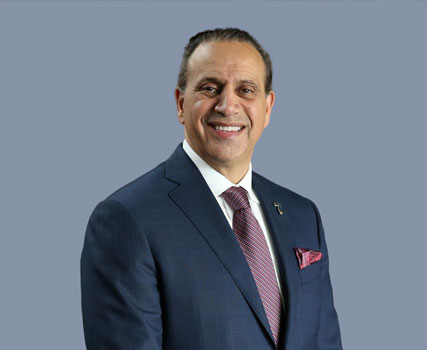
Larry Nussbaum
Partner
Larry Nussbaum is a Boston-based personal injury attorney and founding partner of Altman Nussbaum Shunnarah, known for a trial-ready approach that takes cases against insurers all the way when needed.
Author's Bio